DANSE MACABRE
skeletons dance you to a grave near you since at least 1424.

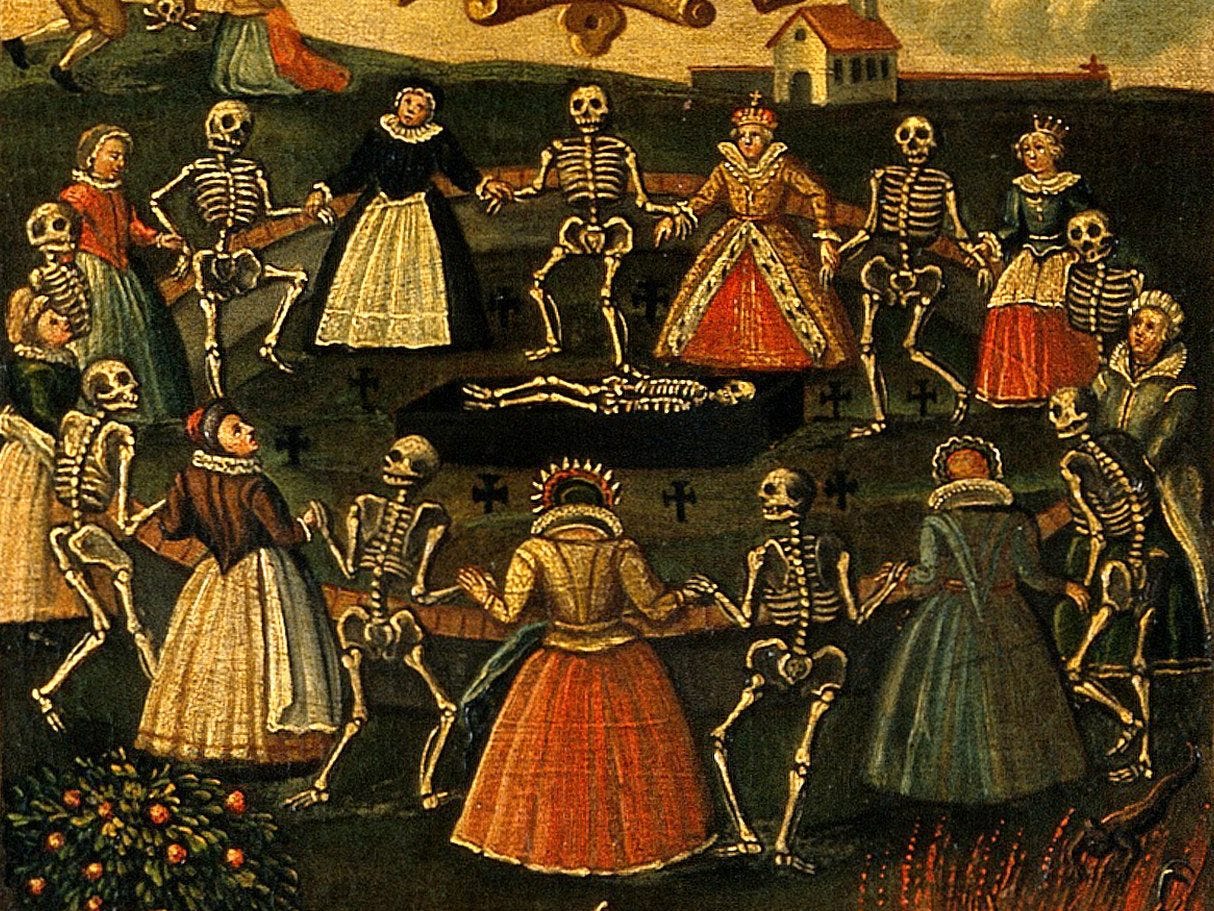
Danse macabre originated during the 13th and 14th centuries, when Europe was struck by famines, wars and the Black Death that decimated the continent’s population. It’s estimated that the plague 30% and 50% of the European population. Death was a constant presence in the lives of medieval people.
The danse macabre, or dance of death, is a memento mori meant as a medieval allegory on the universality of death. This motif has been used in visual arts, drama, poetry, and music since the late Middle Ages.
Danse Macabre illustrates the all-conquering power of death. Paintings include decaying corpses and skeletons dancing with the living, leading them to their inevitable destiny.
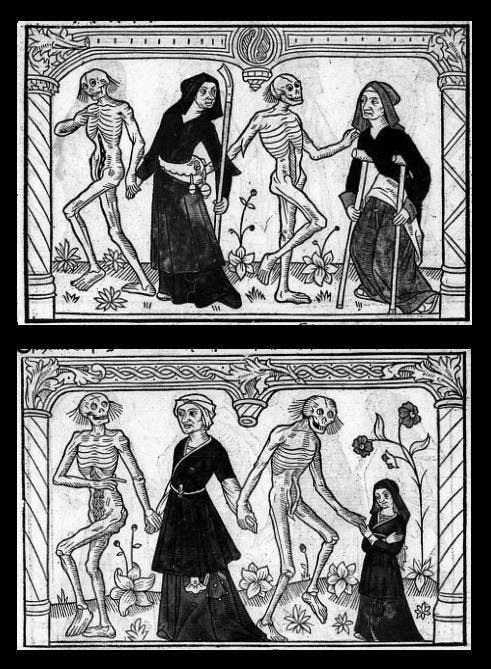
Danse macabre imagery functioned as a memento mori for the largely illiterate population. Paintings and statues were the best way to get messages across to people that couldn’t read poems and novels.
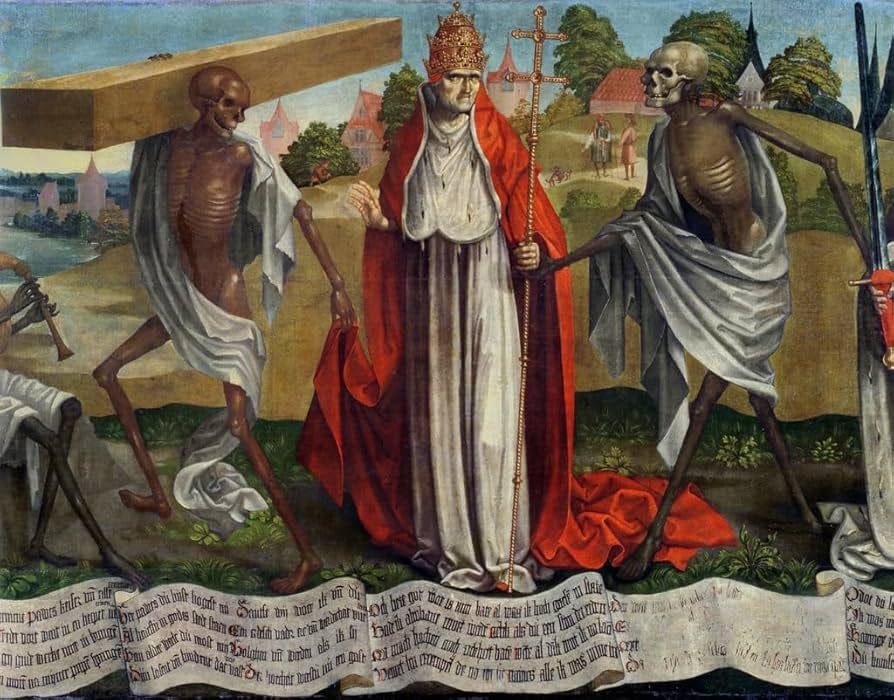
The living dancers are from all ranks of medieval society. Dancers featured would typically include a pope, an emperor, a king, a nobleman, a knight, a merchant, a doctor, a painter, and a child, just as some examples. This represents that no matter who you are, rich or poor, smart or stupid, death will come for you because death does not discriminate. We are all equal in death.
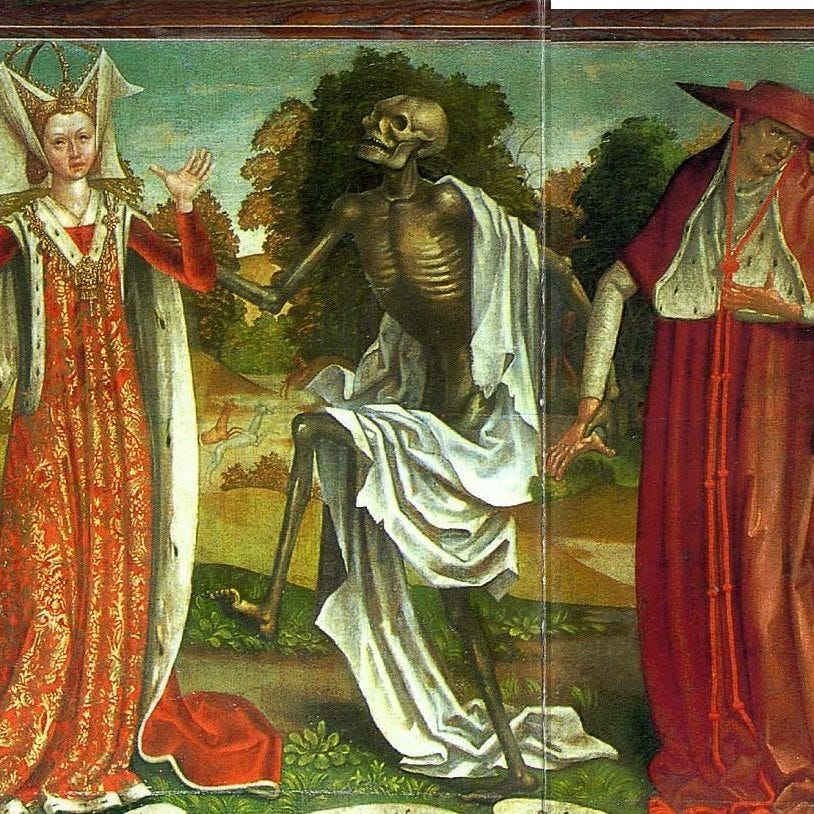
Early danse macabre art was often featured on church walls and in cemeteries. The earliest example was painted in the Cemetery of the Innocents, Paris, in 1424, though there have been a few earlier examples in literature. Another was painted onto the walls of a Dominican cemetery in Basel, Switzerland, in 1441.
Inspired by the painting in Paris, more depictions of the Dance of Death popped up over the course of the 1400s. According to the art historian Elina Gertsman, the imagery first spread throughout France and then to England, Germany, Switzerland, and parts of Italy and eastern Europe. Though some of these frescos, murals, and mosaics survive to the present day, many others have been lost and are now only known through archival references.
SOURCES
Daily Stoic. 2026. “History of Memento Mori.” Accessed May 14, 2026.
Encyclopaedia Britannica. 2026. “Dance of Death.” Accessed May 14, 2026. https://www.britannica.com/art/dance-of-death-art-motif
Science Museum. 2026. “Memento Mori.” Accessed May 14, 2026. https://www.sciencemuseum.org.uk/objects-and-stories/memento-mori
The Blackened Teeth. 2026. “Memento Mori: The Inevitability of Death.” Accessed May 14, 2026. https://www.theblackenedteeth.com/blogs/our-blog/memento-mori-the-inevitability-of-death